

Victorian educators strike for fairer wages
Hard news
25/03/26
More than 30,000 Victorian teachers and education staff have gone on strike for the first time in over 13 years in a bid for higher wages and better working conditions.
Highlighting excessive workloads, unpaid labour and a cost of living that continually outpaces wages, protesters congregated at Trades Hall and proceeded to walk to state parliament, chanting and cheering.
The rally was led by President of the Australian Education Union (AEU) Victorian branch, Justin Mullaly. He said the strike was inevitable.
“We’ve got a shortage of teachers... we’ve got a shortage because there’s poor rates of pay,” he said. “All we want is a fair deal.”
The union has rejected the government’s offer of a 17 per cent pay increase over the next four years, asking for a 35 per cent increase over the same period.
Victorian Premier Jacinta Allen earlier in the week disparaged the strike, citing strain on parenting as students are forced to stay home.
“It’s unfortunate that parents cop the brunt of that, in some situations, but that’s on the government,” Mullaly said.
He said the strike is about more than just fair pay for Victorian educators.
“They want to be respected.”

Teens consume less news due to government’s under-16s social media ban
Hard news
4/06/26
A new study suggests Australians between the ages 10 and 17 are consuming less news because of the government’s under-16s social media ban.
“I think we need to recognise the unintended impacts of the ban,” says Professor Tanya Notley, one of three authors of the study published by Western Sydney University on May 18.
Notley and her research team have been researching the news engagement of young people since 2017. Over time, teens have increasingly used social media for news.
This trend abruptly changed when the Australian government implemented its under-16s social media ban in late 2025.
Despite the government’s excitement, only 38% of teens' social media use has been impacted by the ban. Yet over half of them report having less access to news.
“It’s not working,” she says. “They’re not off the platforms that have been banned, but for one quarter, who are significantly impacted by the ban… they say they’re getting much less news.”
The ban has not curbed teen social media use and has been unintentionally effective in limiting their news consumption.
“51%, over half, say that they’re getting less news now because of the social media ban.”
Notley says teenagers who wish to engage with the democratic process are at risk of being cut-off by the social media ban.
“News engagement is critical to civic engagement because you need to feel informed about what’s happening in order to take action on it.”
47% of teens reported to having less access to news of major world news and events due to the ban.
Notley’s research also shows that for young people family is the most trusted source of news. This means solutions must also target older demographics.
For young Australians, Notley and her team suggest media literacy in the Australian curriculum and the need for quality news resources, such as the ABC’s BTN (behind the news).
Notley noted the importance of news engagement as an empowering force for young people.
“Most young Australians say that news, engaging with news, makes them feel knowledgeable and many say it makes them more capable to take action on the issues that matter to them.”
Along with providing young people with robust media literacy, Notley says this issue is society-wide and requires a collective response.
“We really need to be having policy and responses to address that.”

Link to this essay on Substack
5/06/26
A few weeks ago, I joined my partner and her cousin (let’s call him Matt) at a Sunday morning market. They were selling clothes, eating bacon and egg muffins they had left out for a couple of hours. The sun began to hit us, our smartphones stayed in pockets, and the morning had the hallmarks of a day you would go on to remember fondly: it all felt predictable and safe, a stark contrast with the world we had to re-enter at noon. So I thought it was a good time to chat to them about a recent test I did on two popular AI models.
The night before, I booted up Claude and ChatGPT and used voice mode on each. Wanting to test each model’s fluency and ability to oscillate between languages, I spoke to ChatGPT in English, then Greek, then English. The words I used were not complex and my sentences far from labyrinthine, but the speed at which it hopped between languages was remarkable. Trying the same with Claude I felt like I’d travelled back to a pre-AI time. Claude confidently said it could speak Greek. It could not. It spoke ‘Greek’, phonetically sounding out words, retaining an embarrassing British accent given the level of confidence it had in its bilingual-ness.
After regaling my two humans with a killer anecdote about my robots, Matt lamented the obscene water use of the data centres that make the systems function. I lazily but defiantly replied, saying moderate use of AI, the way most people would use it in a day, uses as much or less water and energy as using your computer for an hour. I tried pointing his anti-AI sentiment towards more worthy targets, like the measurable cognitive atrophy seen in high LLM use. Matt is 22, very online, and progressive. If anyone should know the surface-level ins and outs of AI, it’s him.
He has access to swathes of reliable information and the political predispositions to steer him towards the right knowledge. Why was he so wrong, and so confidently?
I was frustrated, at him, sure, but also at myself. I spend every day browsing the tech sections of The Guardian, The New York times, ABC, etc., and I only learnt about the lacklustre reporting on this topic two weeks ago. My inability to determine truth from fiction regarding AI comes down to one glaring issue with journalism: journalists and news media do not cover the subject of AI anywhere near well enough.
AI is already a transformational technology, from education to labour to science. The tech is sprinting towards the future, and the general population is being fed subpar journalism on the topic, leaving them uninformed and unprepared for an increasingly uncertain future.
Off the top of my head, here are some examples of things the public should already know about:
- At the very least, the names Sam Altman and Dario Amodei.
- The work of hidden ‘AI raters’ who spend hours reviewing content produced by AI to give the impression of fluid intelligence.
- The content (overwhelmingly white/western) that AI is trained on and how this foregrounds Western knowledge at the expense of knowledge derived and rooted in other non-white cultures
- Data centre locations
- High-quality journalism produced with the help of AI
- The potential for AI to help solve complex mathematical problems
- Tokens: what the hell they are and do
Journalists and news media do not cover AI correctly. Due to AI’s broad cultural saturation, I believe the public thinks there is abundant coverage. This perceived coverage has the pernicious effect of convincing people of deep understanding when in reality most citizens have a superficial one.
I propose three potential solutions to the AI journalism issue:
There needs to be more AI coverage (yes, more).
There is not enough AI coverage. AI is upending education, as students seems to be cheating at unprecedented levels; leaders in the space have said that AI will replace most white-collar work within the next five years; using an LLM can have drastic and immediate effects on cognitive performance; AI has assisted in solving almost century-old math equations; and new models are so good at penetrating critical digital infrastructure that they have been withheld from public use. This only scratches the surface. The point is that this technology’s impact is still nascent yet already far-reaching.
According to my own research (assisted by Claude AI) over the past two years, from 15 June 2024 to 15 June 2026, The Guardian published a total of 137,533 articles. 2,244 of those were AI-related articles. These are not articles that merely contain the words “artificial intelligence” or “AI “– they are editorially labelled as being articles that substantially discuss AI. Staggeringly, this accounts for only 1.63% of The Guardian’s total article output. For a technology that may end humanity, this coverage is scant.
In Australian broadcast media, AI coverage is a nothingburger. AI stories on our TV screens bear a spinechilling Wow, can you believe that?! sheen. And that is if AI is covered at all.
Lack of volume has consequences. When AI news is given so little space to take up, only the big, sensational stories can be given airtime; there is no room for complex journalism that sheds a light on lesser-known aspects of the topic. This work would contain information that can provide a deeper level of understanding, allowing people to possess actionable facts. Sure, we should know that Sam Altman’s house was firebombed – my issue is that the general public sees this and googles who is Sam Altman.
Less coverage means new and interesting works get pushed to the sidelines and can only be accessed by those already firmly in the know.
Why, for instance, has Apertus, an LLM made by Swiss public servants, been absent from AI reporting? This initiative paves a path for LLMs designed as a public good, proving that AI systems adhering to much-desired strict copyright and transparency measures can exist. If you want to learn of Apertus’ existence, you must dig; it is not coming across your feeds or news platforms. Why? The cynic in me wants to say the story is not sexy enough for readers – and therefore not sexy enough for advertisers. Shame.
The Yale Review recently featured a great essay in which its creative writer author detailed his use of AI in his practice. There must be time for works like this.
This is not to say we should increase the volume of positive AI stories alone. This may divert attention away from pressing issues relating to, say, egregious wealth and power concentration in Silicon Valley – but I argue that an overwhelmingly negative reporting of this blooming technology has the power to solidify the AI absolutism that many AI critics decry. Basically: if you keep saying AI is bad and the worst thing ever, yes, I do think that you are helping bring about a future wherein your worst fears materialise.
AI coverage needs to be more balanced – and helpful.
Along with increasing volume, news organisations and journalists must reevaluate how they go about reporting and framing AI reporting.
I want to be careful with this solution. I do not believe that nuance or balance can be achieved in this endeavour with a band aid approach: by slapping on a short paragraph filled with the (cheap) wonders of AI after spending a thousand words warning readers of AI’s existential risks. AI will take your jobs and concentrate wealth like never before in history – but here’s how to use ChatGPT to organise a cooking schedule inspired by Romcoms from the 2000s! This is boring and treats readers like children in need of a distraction while the adults speak in the kitchen.
This BBC article exploring the way AI chatbots can teach humans to be better listeners is a strong example of the surprising reporting that is possible when journalists are given permission to pursue unexpected angles. The article is quietly radical in its approach; most reporting on AI chatbots has highlighted their negative effects, from sycophancy to hallucinations, to their role in domestic terrorism. Amidst the tornado of derivative AI journalism that covers the same four factoids, this journalist decides to extract potential uses from AI to enhance human relationships.
Balance can also be achieved by focussing on more useful applications of the technology.
Earlier this year The Guardian ran a weekly AI email newsletter. Once a week I received an email with an article following a journalist’s journey with the tech. Despite little application in my own life, there was something insightful in 1) reading about ways I never thought to use the technology and 2) having a light shone on the realities of so many people who already rely on it. ChatGPT has over 850 million active users; we need journalism that details how hundreds of millions of people are using this technology. A first-person account (compared with the dry ‘objective’ coverage we normally get) is on its way to the nuanced, complex coverage people deserve.
There must be time and space allowed for journalists to think deeply and optimistically about the future of this technology too. By all means, please keep the critiques of the companies wielding this monumental technology coming. I am right there with you! But we also need some time to think of how to bring about a future where this technology is better and for the people. This cannot happen without a concerted effort.
Audiences shouldn’t be forced to niche tech blogs or a pay-walled Bloomberg for AI coverage.
And this leads to my final and simplest solution in battling the AI in journalism crisis.
Journalists and news media need to treat AI (and all tech, really) the same way they treat other local and global news.
Again, AI is swiftly transforming how we go about our lives.
Scholars admit this current period could be akin to the industrial revolution. News media and journalists do not treat it as such. As the technology infiltrates politics, workplaces, schools, and personal relationships, it has become a reliable method of analysing complex global power dynamics and international conflicts. If I want to take the global temperature, I look at the tech section of any respectable publication (even though lots of work still needs to be done in this area!). I knew everything I needed to know about the next four years when every relevant tech CEO sidled up to Trump at his 2024 inauguration.
When it comes to Australian broadcast news – your Channel 7s and 9s – a good place to start is having dedicated AI segments. These channels have no qualms spending hours upon hours pontificating on the lives of the celebrity of the week. Why not try an AI roundup at the end of the news bulletin akin to the sports segment? Australians like sport, I get it, but 56% of people use AI tools weekly. Only around 40% of Australians follow the AFL. Seems like a missed opportunity… but it doesn’t have to be! Take the opportunity, Channel 9 and 7 (and 10, I guess).
Where to now?
As AI becomes more ingrained into every facet of our lives, diligent journalism must accompany it. News organisations must begin treating AI stories with as much weight as the rest of their bulletin, and this can only happen before these stories come across a journo’s feed; we cannot come upon a new AI development, write it up, and decide afterwards that, hey, maybe we should put this as headline news. No. Instead, we must have a framework that approaches AI with the same care and intention as other areas of public interest knowledge. I get it, AI is trendy, and it can be easy to get carried away with slipshod, sensational reporting. But that is no excuse. If we treat AI frivolously, we may let a transformational technology morph the world into something unrecognisable before the public has a say or even knows the fundamentals.
Societally, we should be obvious and pragmatic in how we approach this. You think my mum knows what “machine learning” means? No, but if the government sent her a digital factsheet every month, she would. This sheet would cover important new insights, developments, and risks in artificial intelligence. It would detail ways to use AI ethically and in ways that do not compromise cognitive agency, and there would be directions to further resources. It would be named the Australian AI Literacy Initiative. Let’s get the ball rolling.
There is of course an urgent conversation that must be had about the increasing importance of tech and AI literacy, but I’m running out of words.
To my peers, you young, educated, politically motivated scallywags: we are the future of this issue and we are its solutions. Read widely, read those with whom you disagree, avoid taking Instagram infographics at face value, and be more discerning. I know it is tempting to fall in line; especially since 2020, we have become more tribal in our political and social leanings. It feels safe, and I am guilty too. But we must sacrifice epistemic comfort for the greater good. Please, if you want to make a claim about how much water an AI prompt uses, make sure you know the answer before speaking.
I have a well above average level of interest in AI, and I still feel like I’m just barely grasping the fundamentals. Some will say this due to an inherent daftness I’ve never been able to shake. Others will say our journalists need to do a better job. I will say both.
I don't expect every person on the planet to know the ins and outs of AI – but journalists must
Opinion
Link to the piece on Substack
19/07/26
Before I resume full time study next week and shift my media diet to an interminable conveyor belt of hard news and the odd fluffy opinion piece about how to beat screen addiction, I made an effort to read some fiction to remind myself that I am a human with feeling, capable of working my empathy with imagination and creativity. To remind myself to care for others — but not by reading the analysis of the latest outrageous podcast appearance by an increasingly popular Australian politician, her enduring lack of charisma somehow doing nothing to quell her rise to serious power, then afterwards deciding, hey I should do the opposite of this!. No no no no. I have the ability to become someone else within the pages of a good book. I’m a little over the fact-sheet-to-empathy pipeline.
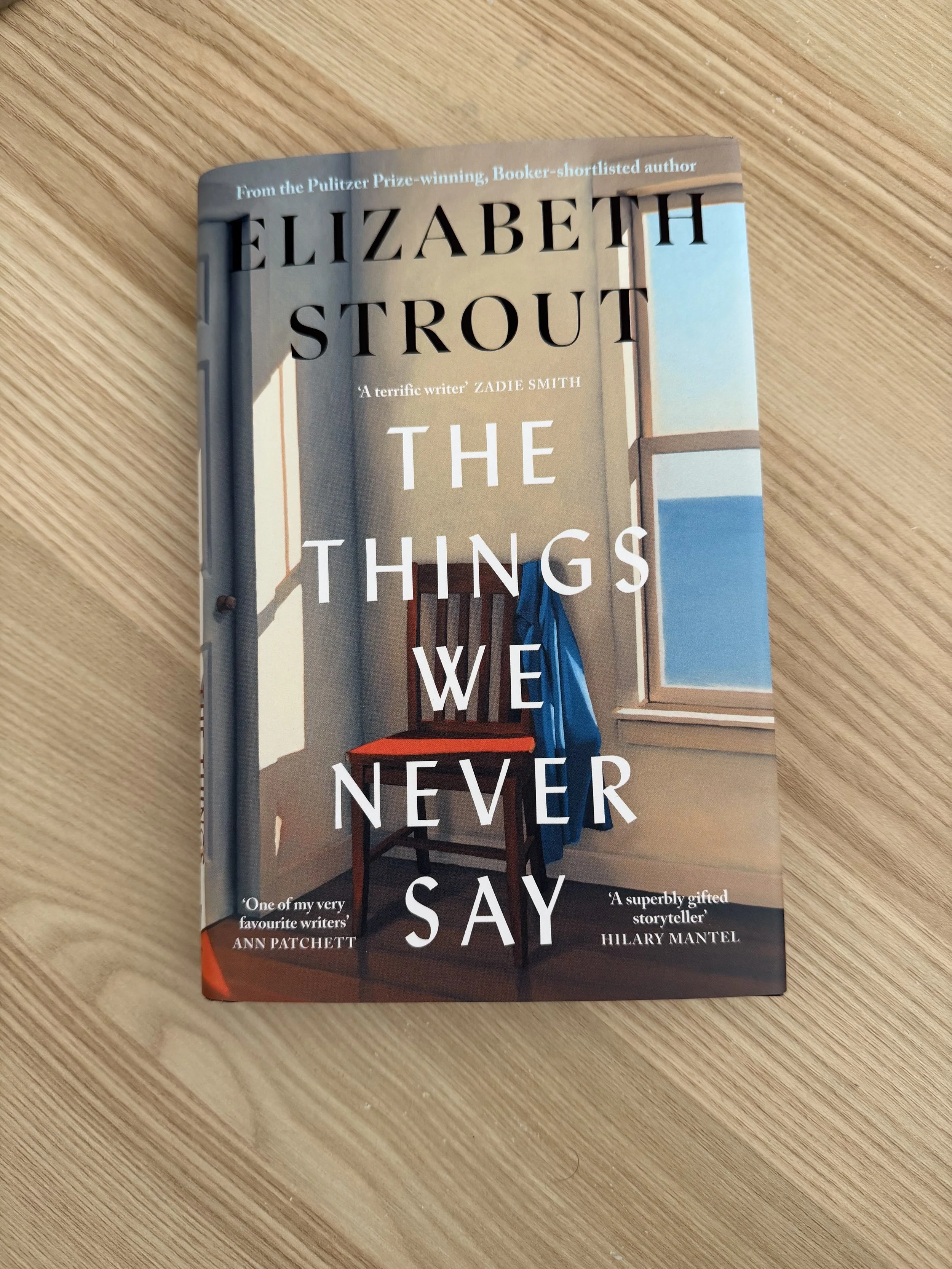
I was predisposed to love this book.Elizabeth Strout’s The Things We Never Say presents Artie, this man, his relationships, his life: the Everyday. After feasting on Karl Ove Knausgaard’s My Struggle series a few years ago (thank you Jeremy Strong), my hunger for quotidian literature has never abated. Yes, the stilted conversations Artie and Evie share before bed is the meat and bones, how they change each day, how each day’s happenings subtly alter the ways the characters relate to one another, slowly accumulating, the characters all of a sudden standing at opposite ends of the planet. I eat this shit up.
Strout’s mundane story necessitates a mundane style. The book’s biggest moments — Artie’s forthcoming death, for example — are laid out matter-of-factly, drawing no more attention than required, the reading experience never feeling voyeuristic. This big bad thing happened, that’s life, and then this good thing happened, and that’s life too. I appreciate the sporadic nature of the prose, mimicking the thoughts of a man lamenting eight hundred things at once.
The crazy good stuff
Following Artie we quickly learn his noble, timeless wish: to inspire his students the same way his teachers inspired him. In this I became swept up again and again, feeling a galvanising optimism rise within me, a desire to follow in Artie’s footsteps, to learn everything always and help others find what they’re meant for at all costs. As a (highly functional) pessimist myself, this is no small feat. And all the while — and this is glaringly, almost embarrassingly obvious as I flick back over the book — the grim core of Artie’s being is laid barerepeatedly for me to gawk at. I read Artie’s admission of suicidal ideation. I read Artie’s crippling anxieties about a world on the brink. I read Artie discovering a truly fucking destabilising secret. But I suffer a fondness-induced amnesia — because Artie’s love for his students is so, so bright. So bright it blinds me — and Artie. Here Strout unearths adepressing profundity: love conquers, but it masks, too. We are fed pages of Artie’s dismal prognosis for his country and planet, but one magnanimous hand on the shoulder of the petulant Danny Marino or his giving the overlooked Rhonda Lazzare the time of day, and I feel good. I forget. And it’s grotesque.
In the moment, the novel’s downer of an ending makes the stomach drop, though it shouldn't: Strout had been laying the groundwork for 200 pages. It’s her skill that makes the ending at once harrowing and supremely satisfying. Like a good novel does, The Things We Never Saythrows you out to sea. All you’re left with are ideas; hopefully they float.
Strout posits two edicts on the nature of life and love. The first: love conquers all and tears our anxieties to shreds. The second: love is so powerful that in its brightest moments it may blind us to the innate horrors of being alive, and shortly thereafter we forget such horrors, only for them to rear their heads later, more potent and with malice.
Closing my sleeveless hardback I ponder the utility of love. If unrelenting love and hope for those around me leaves me blind to my own turmoil, is it worth it if it lights the flame of curiosity and altruism in another? Or could love have the healing properties we are so desperate for? Probably both.
Like I said, I was primed to enjoy my time here. There was of course the vicarious living through Artie that I experienced; he articulated worries that I share but lack the words to convey, and I derived immense comfort from their being so topical. (ChatGPT gets a solid mention towards the end.)
Strout’s ability to tease out such pathos from such a brisk novel is remarkable. In barely 200 pages she shows that, unavoidably, there will be space for all of it: pain, change, grudges, truth and lies, an indifferent world, a world with a future, and the chance for time to work its magic and bring people back to one another — even if some of us don’t last to see it.
The book left me totally unable to think about the footy game I’m about to head to (Pies v Blues, huge game). What a joy, what a privilege.
“My occupation is gone. Just like Othello. My occupation was my students, and now they are gone.”
Review: The Things We Never Say by Elizabeth Strout
Review
20/05/26
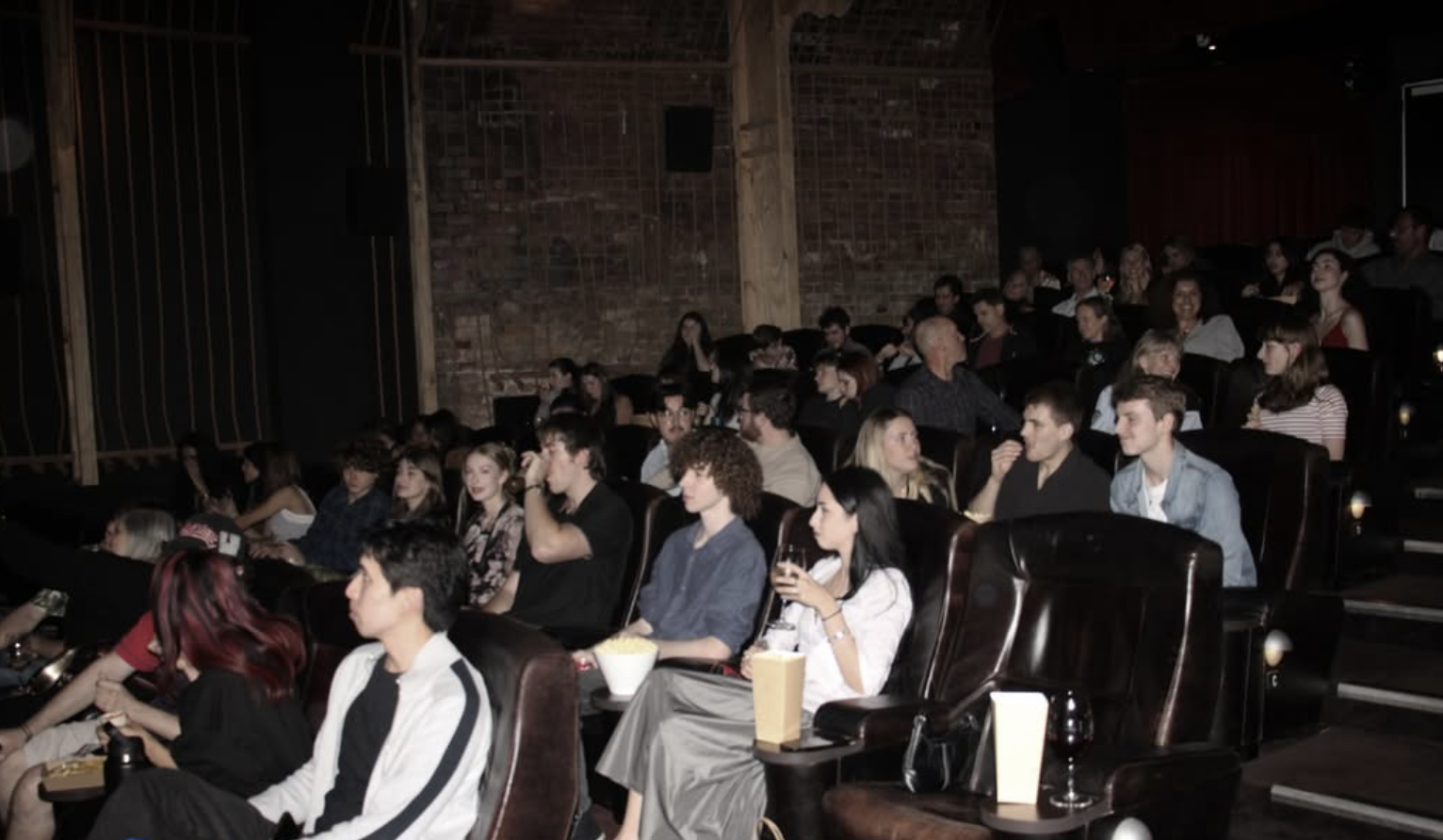
Independent post-apocalyptic film Omega One screened at the Classic Cinemas in Elsternwick on March 20th.
The project is a rarity – an Australian film with an all-female roster of writers and directors.
Only 16% of Australian films are directed by women. The film represents a push by female filmmakers towards independent films as they sidestep studio governance.
“Women are often rejected from the bigger productions, hence we all navigate to the independent films,” says Jessica Henderson, co-writer and star of Omega One.
The screening played to cinema at capacity with seventy-four seats sold.
Written and directed by three female filmmakers, the picture is part of a growing trend in independent cinema, as women continue to flood to smaller productions to take on scarce creative work.
Exact numbers are difficult to determine, but independent films appear to attract more women crew members than larger commercial productions.
Elmarie De Beer, co-director, co-writer and star of Omega One, speaks of this phenomenon.
“It feels like women need to climb three mountains for the same visibility as a man… probably why independent film productions give more space to women,” she says.
Her collaborator, Henderson, says independent cinema grants women the freedom to create on their own terms.
“We discovered if we don't just get out there and do it ourselves, these guys would never give us the opportunity,” Henderson says.
But the freedom these Australian filmmakers seek in independent filmmaking comes at its own cost as local films struggle to compete with foreign projects.
Despite an unstable film production ecosystem, there is a desire from local filmmakers to create. In Australia last year, thirty-one independent films that premiered were local, while only thirteen were international.
The Australian Government’s legislative attempts to push major streaming platforms to invest in local content are too recent to observe any tangible impacts.
Co-director, co-writer and actor Becca Rowe spoke of the precarious situation independent Australian films find themselves in.
“I think filmmakers want to have the safety of knowing that their film will have somewhere to go that isn’t just an oversaturated space like YouTube.” Though she is still optimistic. “Independent filmmaking means courage to me.”
De Beer offered her own potential solutions to the issue.
“I think the main thing I would say is making funding more widely available through grant systems, and also providing more education around the logistical side of it.”
Most film opportunities in Australia are freelance jobs at the behest of major studios, and the Omega One creatives represent a defiant sect of young artists making their own work.
Rowe explains the allure of this path. “It's ungrounded, risky, and very difficult. I think it’s about taking a massive leap in a direction that doesn't exist yet.”
De Beer concurs, saying, “Oftentimes, indie films are able to explore things in a way that A-list films don't because they're not as heavily bound by corporate decision-making.”
To De Beer the value of independent filmmaking is too great. “Independent filmmaking means the ability to tell and experience stories without censorship.”
Omega One will continue its release as the project’s filmmakers hope for a distributor to adopt the project.
Independent Melbourne film Omega One with all-female writers and directors screens at Classic Cinemas
Hard news
Callum
Profile
3/03/26
I think [Amazon] owes me about 51 dollars.’ Meet the writer running from Pokemon fan fiction to full-blown sci-fi epics.
I greet Callum on the first day of his graduate diploma. He sits before a thoroughly abused laptop. He talks swiftly, occasionally pausing to ensure I’ve really heard what he’s just said and taken the time to write it down.
Immediately Callum wants to get his origin story out of the way. With haste and a light-hearted embarrassment that lets me know it’s okay to laugh he touches on his brief career as a Pokemon fan fiction writer on the Amazon-owned Goodreads. He wishes that his origins had a little more moxie, though he finds the silver lining we’re all familiar with: the work wasn’t for free. (It should be noted that as of now he is yet to be paid in full by Amazon for his work as a Pokemon fan fiction writer.)
Two years later Callum’s story would begin to take shape. ‘I think covid ruined me,’ he says. Despite never contracting the illness, the mental residue of the Melbourne lockdowns of 2020 and 2021, his year 11 and 12 respectively, remain. I’m struck by a sudden change in his character as he recounts those years. His eyes drop and he speaks slowly.
The pandemic’s effects for Callum were anything but abstract: his grades slipped, he failed multiple classes, and he became miserable. But he ‘somehow managed to squeeze out a decent English exam.’ This, he explains, is why he’s able to be here — at university — at all.
Before covid struck, Callum’s keen interest in astronomy led him to dream of being an astrophysicist. His mother regularly took him to free astronomy lectures at Swinburne University, nourishing his love of exoplanet studies, the study of planets orbiting the sun.
When the pandemic was in full force, Callum found solace in the pages of George RR Martins A Song of Ice and Fire, books Callum credits with ‘saving [his] life’, developing his taste for fantasy, and lowering his grades.
Combining his love for astronomy, his literary interests and his unease, he would begin work on an original science fiction series, Arm of Orion. These novels have since been abandoned, and that’s okay with Callum, as he has much loftier ambitions.
He casually tells me that his next project, a 120-thousand-word sci-fi epic, is imminent. ‘It will be done next week.’ His conviction is palpable.
Towards the end of our chat, Callum switches gears. He digresses into what I can only describe as his educating me on why my personal notions of good and evil, right and wrong are naive, borderline childish — all while invoking the 2010 animated comedy, Megamind.
Drawing parallels between the film’s fictional lead and the very real President of the United States, Callum outlines what he calls ‘villainy as theatre’, essentially a performance of evil unique to this point in history. This theatre hides something ‘much worse underneath’, he explains. Where does this leave Callum? And where does this leave the rest us? Callum doesn’t know, nor does he think it’s his job to know. ‘Megamind is brilliant. The best superhero movie of all time.’
Our conversation trails off, we’re both exhausted. I ask Callum if he’s thought about getting the money he’s owed off Amazon. ‘They keep emailing me.’